Manual Deployments: An Underestimated Risk for SMBs

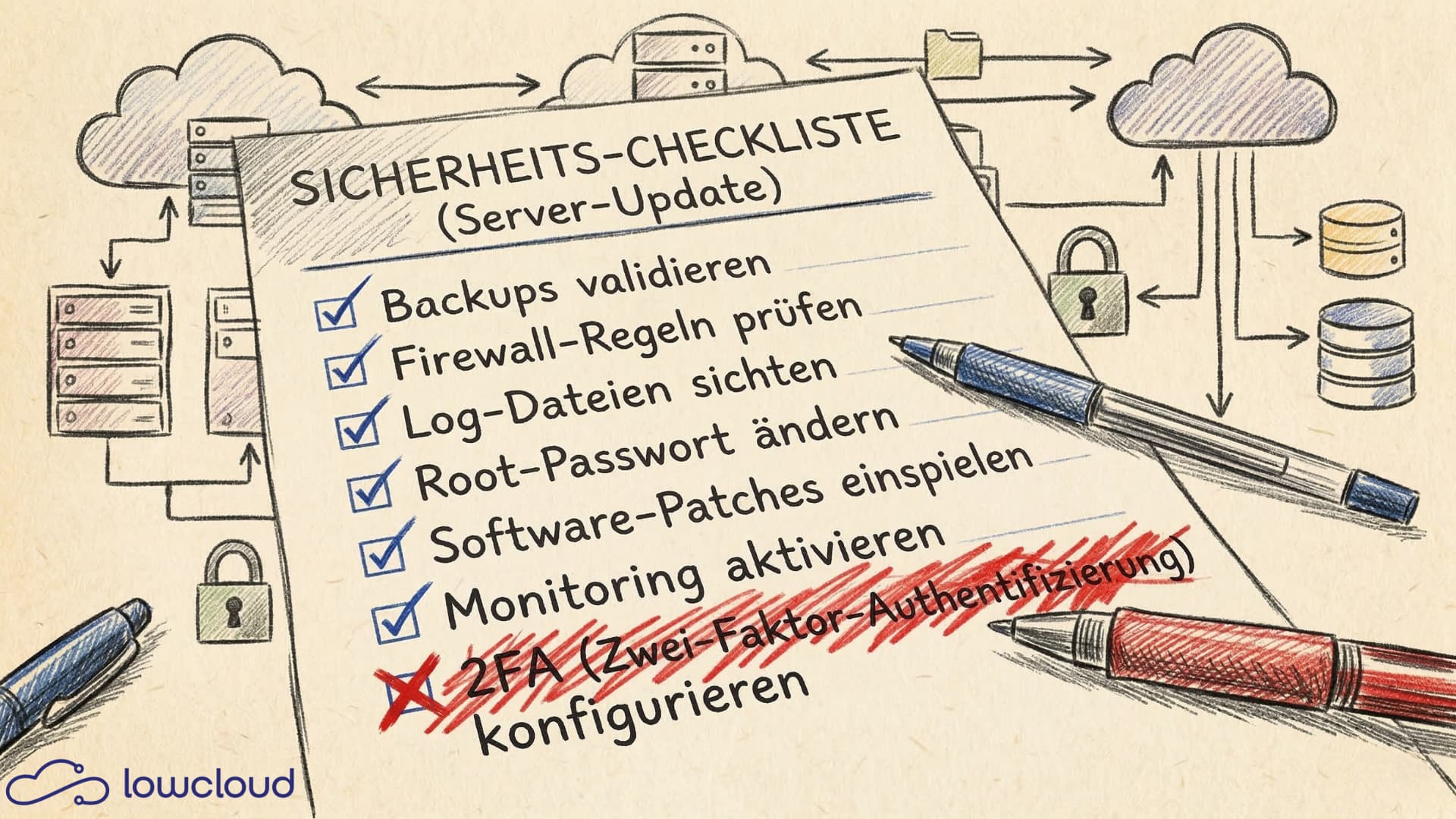
Many mid-sized companies haven't fundamentally changed their software delivery in years. Manual deployment works — until it doesn't. And then it usually breaks at the worst possible time.
What Goes Wrong with Manual Deployments
A deployment that consists of a list of steps in a Word document or lives in a single developer's head isn't a process. It's a hope.
That sounds harsh, but it reflects the reality of many mid-sized IT departments. The typical scenarios: A developer forgets to update a configuration file. Another executes the steps in the wrong order because the instructions haven't been updated since a system migration. Or a new colleague takes over deployment for the first time and discovers that her predecessor's implicit knowledge was never documented.
The Human Factor
The problem isn't that people are careless. It's that manual processes are inherently variable. No human executes the same step exactly the same way twice — especially not under time pressure or after a long day.
Checklists help but don't fundamentally solve the problem. They reduce the error rate; they don't eliminate it. And they only work when consistently maintained and kept up to date — which rarely happens in practice.
On top of that, manual deployments lack any form of automated validation. Whether the application actually runs correctly after deployment is often only discovered when users start complaining.
No Rollback, No Plan B
What happens when a manual deployment fails? In automated pipelines, a rollback takes seconds. The previous state is simply restored. With manual processes, a rollback is often just as complex as the deployment itself — sometimes more so.
This leads to a dangerous reflex: errors are patched directly on the live production environment instead of rolling back cleanly. This worsens outages and extends downtime.
The Hidden Costs of Manual Processes
The obvious costs of a failed deployment — downtime, lost transactions, frustrated customers — are the easy part. The truly expensive consequences build up over time.
Technical Debt: Because every developer deploys slightly differently, inconsistencies creep into the production environment. Eventually, nobody knows why the production server is running a library version that should have been updated long ago.
Security Risks: Patches and security updates aren't consistently applied because deployment is cumbersome. This makes manual processes a direct security problem — especially in industries with heightened compliance requirements.
Slowed Development: Teams afraid of deployment deploy less frequently. This leads to larger, riskier releases instead of small, manageable changes – a pattern that deepens the deployment bottleneck.
The Bus Factor
A term that should come up in every serious conversation about deployment processes: the bus factor. It describes how many people a company could lose before critical knowledge is irretrievably gone.
With manual deployments, the bus factor is alarmingly often just one. A single developer knows the process in all its details. When that person gets sick, leaves the company, or goes on vacation, the team faces a real problem.
This isn't a hypothetical risk. It's a structural problem that automation directly addresses.
What Deployment Automation Actually Means
CI/CD — Continuous Integration and Continuous Delivery — sounds like a concept for large tech companies with dedicated DevOps teams. That's no longer true.
Continuous Integration means, at its core: every code change is automatically built, tested, and validated. Errors are caught before they reach production.
Continuous Delivery goes a step further: the path from a verified code change to production is automated and reproducible. The deployment itself can be triggered at the push of a button or fully automatically.
The result: deployments become routine operations, not risky interventions. The team can release more frequently, more safely, and with greater confidence.
CI/CD for Mid-Sized Companies: Where to Start?
The most common mistake when getting started with deployment automation is trying to implement the perfect solution right away. This leads to months of planning phases without tangible results.
A pragmatic approach works better:
- Document the current deployment process — even if it's chaotic. Only what's documented can be automated.
- Automate a simple build step — for example, building a container image on every git push.
- Add automated tests — even simple smoke tests are better than no tests.
- Automate deployment to a staging environment — production comes later.
Each of these steps delivers immediate value and builds the team's confidence in automated processes. For a complete roadmap from containerization to GitOps, see our SMB deployment guide.
Kubernetes and DevOps-as-a-Service as Accelerators
Kubernetes has established itself as the de facto standard for container orchestration — including in mid-sized companies. The technology offers exactly what manual deployments cannot: declarative configuration, automatic rollback, health checks, and scaling.
The challenge: Kubernetes itself is complex. Setting up, operating, and maintaining the cluster requires expertise that many mid-sized teams don't have in-house.
This is where DaaS platforms come in. They abstract away Kubernetes complexity and offer structured deployment workflows without requiring the team to dive deep into cluster management. lowcloud is one such platform — built for teams that want the benefits of Kubernetes without building their own platform engineering department.
In practice, this means: deployments are triggered through a defined pipeline, rollbacks are automated, and the application's state is traceable at all times. Developers focus on code, not deployment infrastructure.
Conclusion: When Is the Right Time?
The most common answer to when a company should start with deployment automation is: "When we have more time" or "When the current project is finished."
That time never comes. Manual processes continuously generate overhead that delays other projects. The right time was yesterday — the second-best time is today.
The entry point doesn't have to be big. An automated build step, a simple test, a reproducible deployment to staging. That's enough to start. What's not enough is continuing as before and hoping the next manual deployment goes smoothly.
Ready to take deployments out of the risk zone? lowcloud offers a Kubernetes-based PaaS platform that makes deployment automation accessible to mid-sized teams — without months of infrastructure setup. Learn more about lowcloud hosting
Self-Host n8n on Hetzner: Complete Docker Setup Guide
Step-by-step: deploy n8n with Docker on a Hetzner VPS. Covers reverse proxy, SSL, backups, and data sovereignty — no managed cloud needed.
DevOps Tool Sprawl: How It Happens and How to Stop It
Tool sprawl costs more than licenses: cognitive load, slow onboarding, lost knowledge. Here is how to bring order to your DevOps setup.